Petuh from Flensburg: A Blended Speech with a History
Petuh, also called Petuhtante German, arose in Flensburg in Schleswig-Holstein and combines Standard German, Low German and Danish. Is it still a dialect or already a language of its own? This article explains what makes Petuh what it is, where the name comes from and who speaks it today.
What Defines Petuh
The vocabulary is mostly German. Grammar and sentence structure, on the other hand, owe a great deal to Danish and Low German. Petuh has therefore been described as Danish wearing German words. Anyone who knows only Standard German understands many sentences at once, even though their construction departs from the grammar taught in school.
Whether Petuh counts as a dialect or a language has no clear answer, because three linguistic systems interlock. There is no official spelling, and vowels are often dropped when people talk. How it is written therefore depends on who writes it down. That is typical of languages that are mainly spoken.
Where the Name Comes From
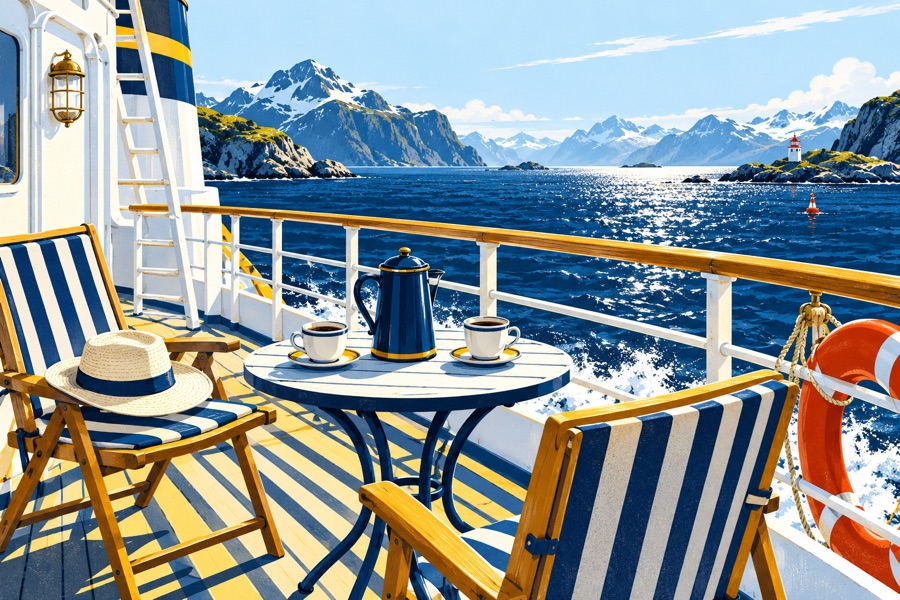
The name is traditionally tied to the Petuh aunts: educated townswomen in Flensburg in the late 19th century who met on ferries for coffee and conversation. Many of them held a season pass, a so-called partout ticket. Petuh is said to derive from the French word "partout," meaning "everywhere." That fits a ticket that was good for every trip.
Female speakers are called Petuh aunts, and speakers in general are called Petuhschnacker. Both terms show that a small community has formed around this blended speech.
A Few Expressions
Szünde expresses regret and means roughly "what a pity." Aggewars stands for annoyance or a muddle. Ohaueha can signal surprise, relief, fright or doubt, depending on the tone.
Danish influence appears not only in Petuh itself but also in the dialects of the surrounding area, such as Angeln and the Schleswig Geest. Petuh is thus part of a larger German-Danish language landscape.
Is Petuh Still Alive?
Today Petuh is nearly extinct. It is spoken mostly by actors and amateur performers, now and then on guided tours and at local shows. As an everyday language it hardly matters anymore. It belongs instead to regional tradition, kept up by enthusiasts.
Anyone who hears Petuh hears German words in Danish word order. Petuh shows how contact between several languages can produce a blended speech with its own humor and its own words.
The Fjord as a Stage
Depending on how it is counted, the Flensburg Fjord stretches roughly 40 to 50 kilometers inland. Its inner part begins at the harbor tip in Flensburg and ends at the Holnis peninsula, followed by the outer fjord out to the Baltic Sea. The ferry story that explains the name Petuh unfolds on this water.
That steamships are still part of the scene here is shown by the Dampfrundum, a festival of steamer trips and races held every two years since 1993. A ferry link between Flensburg and Kollund in Denmark is also operated again, using the ship Feodora.
Flensburg has more than 90,000 residents and long lived off trade across the water. In the 18th century, commerce with the Danish West Indies brought sugar and rum into the harbor, and the rum blend remains a Flensburg specialty to this day. Anyone who wants to understand the blended speech should therefore also look at the city where German and Danish met every day.